
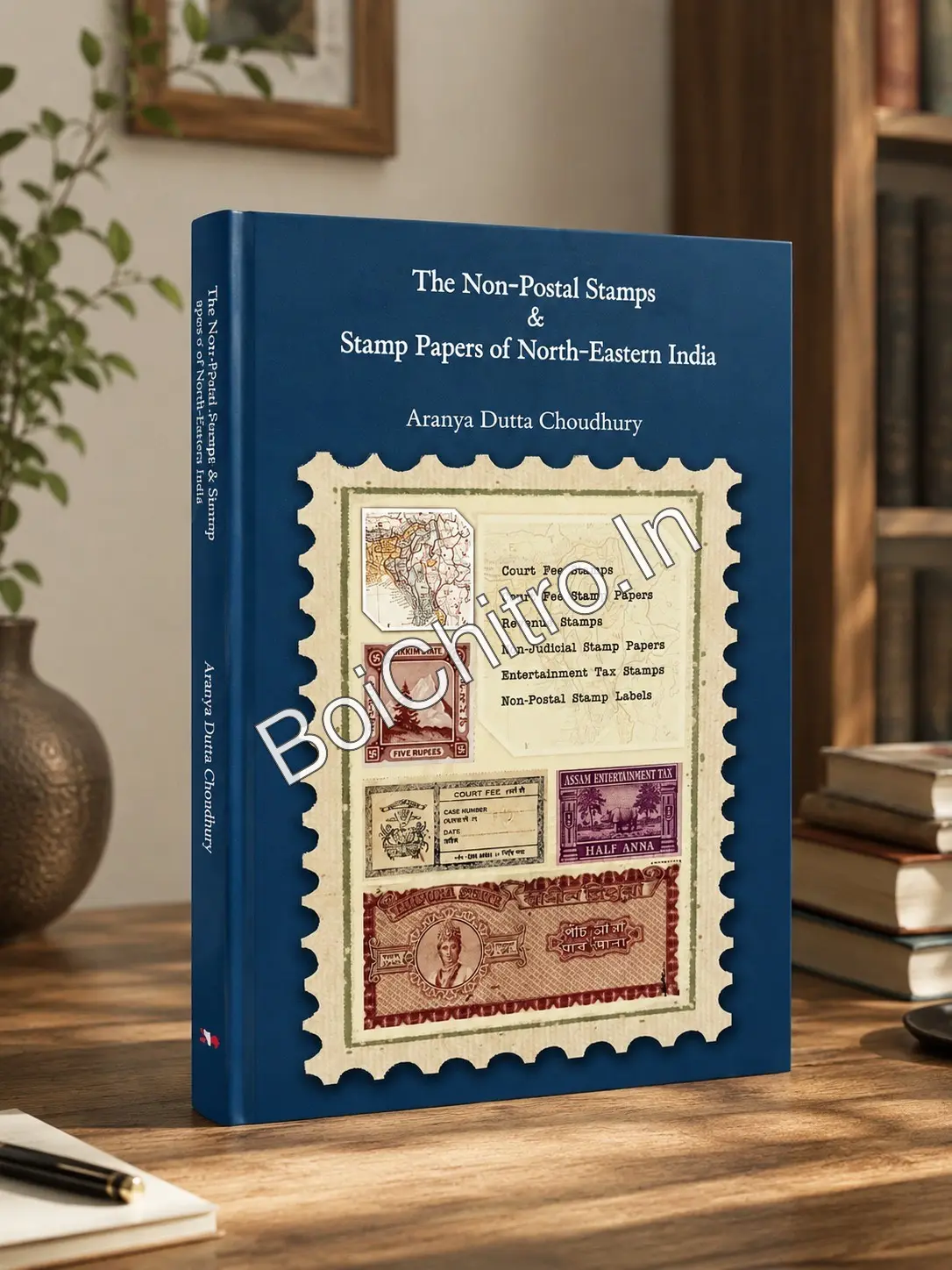


It gives me great pleasure to introduce-The Non-Postal Stamps and Stamp Papers of North Eastern India’, a landmark work that brings attention to an often-neglected yet critically important aspect of our region’s history.
This research, so meticulously carried out by its author, Shri Aranya Dutta Choudhury. focuses on revenue stamps, court fee stamps, and legal stamp papers and offers a rare insight into the fiscal instruments that shaped governance, legal systems, and financial transactions across the princely states of Manipur, Tripura, Cooch Behar, Sikkim, as well as the British-administered province of Assam.
These non-postal issues-impressed stamps, adhesive revenues, and stamped papers-were far more than mere administrative tools. They served as tangible expressions of legal authority and state identity. Their monograms, seals, and visual motifs reflect not just bureaucratic function but sovereignty, tradition, and the evolution of administrative practices.
Tripura’s contribution to this legacy is particularly significant. The groundwork for a modern administrative and fiscal structure was laid by Maharaja Birchandra Manikya (r. 1862-1896). He introduced sweeping reforms including a formal excise system, enhanced record-keeping and the early registration of land in Independent Tipperah (Swadhin Tripura). These measures helped pave the way for the introduction of formal stamp usage on legal documents.
His grandson, Maharaja Birendra Kishore Manikya (r. 1909-1923), took a decisive step in this direction by introducing Tripura’s first revenue stamps, which were printed in England. These stamps, professionally designed and manufactured, represented a leap forward in both aesthetic and administrative standards and aligned Tripura with global philatelic and fiscal practices of the time.
The process of modernisation continued under Maharaja Bir Bikram Manikya (r. 1923-1947), whose forward-looking governance saw the expansion of the state’s revenue systems and the refinement of legal instruments. Even in the final years before integration with the Indian Union, Maharaja Kirit Bikram Kishore Manikya, (r. 1947-1949), the last ruler of Tripura, ensured the continuity and integrity of these fiscal traditions.


Reviews
There are no reviews yet.